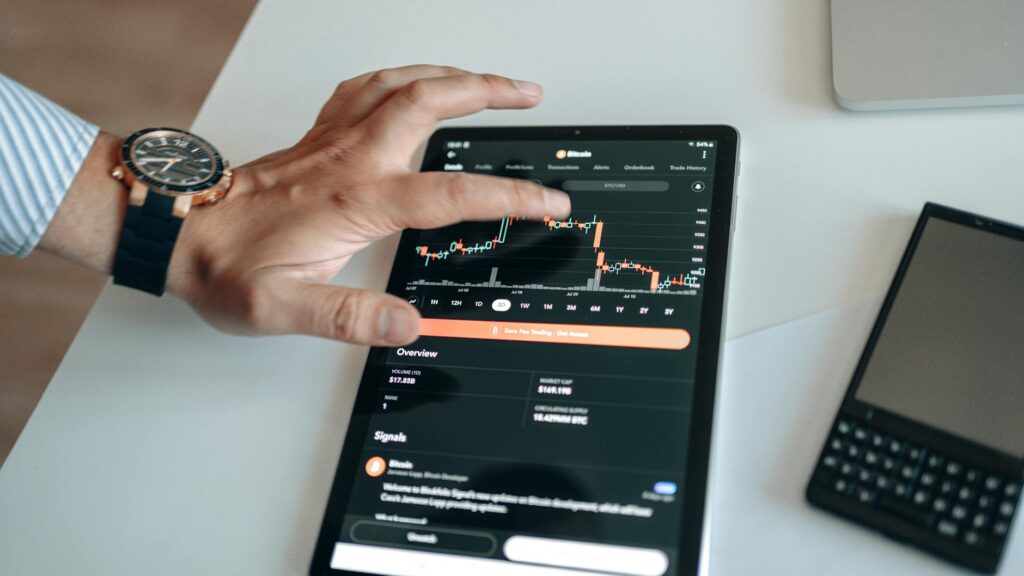
The crypto signals space in 2026 is crowded. A quick Telegram search returns thousands of channels, all claiming 90%+ accuracy, all promising life-changing returns. Most people trying to choose a signal provider have no framework for evaluation — so they pick the one with the biggest Telegram community or the flashiest ads.
This guide gives you a proper framework. By the end, you’ll know exactly what to look for, what red flags to avoid, and what separates a legitimate professional signal service from the noise.
Start Here: What Problem Are You Trying to Solve?
Before evaluating any signal provider, get clear on what you actually need. Signal services are not all built the same — some are designed for futures scalpers, some for spot swing traders, some for automated bot execution. Using the wrong type for your trading style creates confusion and losses.
Ask yourself:
- Am I spot trading or using leverage/futures?
- Do I want to be actively involved (day trading) or semi-passive (swing trading)?
- How many trades per day/week can I realistically execute?
- Which exchanges do I have accounts on?
6 Things a Legitimate Signal Provider Will Always Have
1. Full Signal Structure on Every Alert
Every single signal should include: asset, direction (buy/sell), entry price or range, at least one take profit target, and a stop loss. No exceptions. A provider who sends “BTC looks bullish, might be worth a buy” is not a signal provider — they’re an opinion account.
The stop loss is the most important element. Any service that omits stop losses does not care about your risk management. Walk away.
2. A Transparent, Verifiable Track Record
Legitimate services post their signal history publicly — wins and losses — and it can be cross-referenced with historical price data. Watch out for providers who show only screenshots of winning trades or who claim accuracy rates above 95% without audited proof.
Quality providers operate in the 65–80% accuracy range and make their profitability through disciplined risk-reward ratios, not by being right every time.
3. Consistent Signal Frequency
A reliable provider operates on a predictable schedule. You should know roughly how many signals to expect per day or week, and they should be delivered consistently. Sporadic delivery signals a lack of professional infrastructure.
Conversely, providers sending 50+ signals per day are quantity-over-quality operations. High signal volume is often a cover for low accuracy.
4. Analytical Context
Professional signals aren’t just numbers. A good provider tells you why the trade is worth taking. Is it a breakout from consolidation? An order block retest? Whale accumulation detected on-chain? This context helps you make an informed decision and teaches you to think like an analyst over time.
5. Professional Delivery and Communication
A legitimate service delivers signals through a reliable, organised channel — email, a dedicated app, or a structured group. They acknowledge when signals don’t play out and explain the reasoning in hindsight. Accountable providers treat missed targets as learning opportunities, not things to hide.
6. Reasonable Pricing
Legitimate signal services charge subscription fees that reflect the value of professional analysis. Ultra-high prices don’t guarantee quality — they often indicate marketing sophistication more than analytical skill.
6 Red Flags That Should Make You Walk Away Immediately
🚩 Claimed accuracy above 90% without audited proof. No honest analyst hits 95% accuracy consistently. If someone claims this, they’re either cherry-picking results or fabricating them.
🚩 No stop loss on signals. Missing stop losses are negligence or a deliberate omission so they never record a formal loss. Always required. Non-negotiable.
🚩 Guaranteed profits. No legitimate financial professional guarantees profits. It’s both dishonest and, in many jurisdictions, illegal.
🚩 Pressure tactics and countdown timers. Legitimate services don’t need to manufacture urgency. High-pressure tactics exist to prevent you from thinking critically before paying.
🚩 Anonymous team with no verifiable background. You’re trusting this provider with trade decisions that affect real money. If they won’t tell you who they are, that tells you everything you need to know.
🚩 Only showing wins on social media. Screenshots of winning trades prove nothing if losing trades are deleted. Ask for a complete, chronological signal log going back at least 90 days.
What Institutional-Grade Signals Actually Look Like
The highest-quality signal services in 2026 draw on multiple layers of analysis:
- Technical analysis — trend structure, support/resistance, key indicator confluences
- Smart Money Concepts — order blocks, liquidity zones, market structure shifts
- On-chain data — whale wallet movements, exchange inflows/outflows, stablecoin activity
- Macro context — market cycle phase, BTC dominance trends, broader risk sentiment
When these inputs converge on the same trade setup, the probability of a successful outcome increases substantially. That confluence is what separates professional signal generation from single-indicator guesswork.
Our Commitment at GetTradeSignals
We built GetTradeSignals because we saw too many traders getting burned by signals that promised the world and delivered nothing. Our service is built on transparency, structure, and genuine analytical rigour.
Every signal we send includes entry zone, take profit targets, stop loss, timeframe, and a brief explanation of the analysis behind it. We document every trade outcome. We don’t delete missed calls — we learn from them and improve.
For traders new to the service, we offer an introductory 30-day access period for just 5 USDT.
Start Your 30-Day Trial for 5 USDT →
Make the right choice the first time. Choose a signal service built on results, not promises.